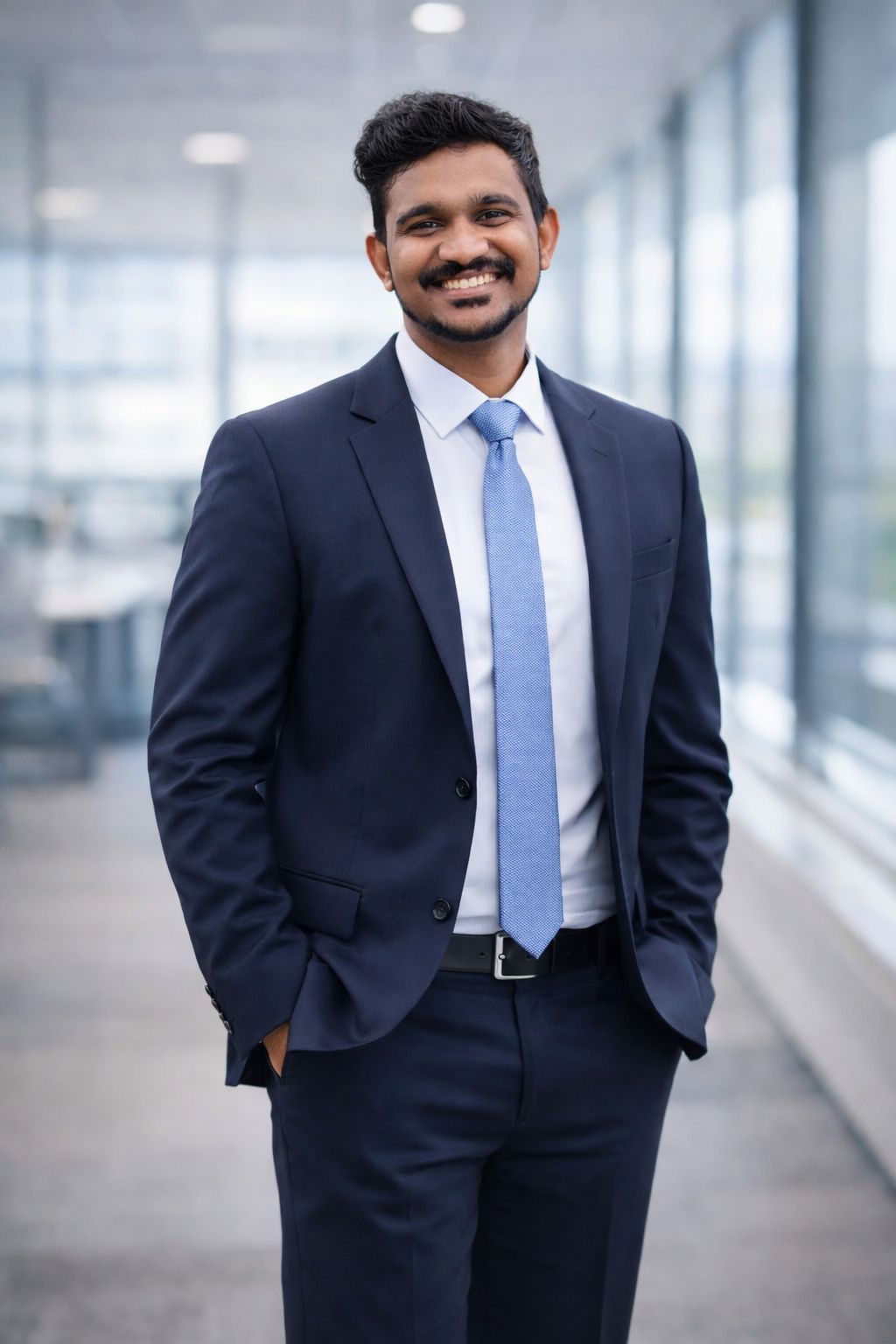
India to Germany
The move was not a reset. It was a continuation of a direction already taking shape through engineering study, project work, and the decision to move toward robotics at a higher level.
This page traces the path from school foundations in India, through leadership and engineering training, to graduate study, robotics software work, and industrial execution in Germany. It explains not only what I studied, but how the technical direction became clear over time.
The move was not a reset. It was a continuation of a direction already taking shape through engineering study, project work, and the decision to move toward robotics at a higher level.
Schooling, B.Tech, leadership, early career foundation
M.Eng, thesis work, and industrial robotics exposure
A clearer timeline of the stages that shaped the move from academic discipline to industrial robotics.
Built a strong academic base through the CBSE curriculum at Sree Narayana Central School.
Completed B.Tech in Mechanical Engineering and built the core systems-thinking base behind the later robotics direction.
University life also developed responsibility, coordination, and confidence through leadership and project work.
Worked in non-destructive testing and gained direct exposure to inspection quality, reporting discipline, and industrial responsibility.
Moved to Germany for advanced study at Technische Hochschule Deggendorf and progressed into industrial robotics work through the KEBA thesis and working student role.
The journey is not only academic. It also shows how the profile developed on the software and systems side.
The direction moved beyond pure mechanical design into structured workflow logic, scripting support, and robotics-oriented software thinking.
The profile combines mechanical understanding, cyber-physical systems study, and industrial robotics context instead of staying in a single narrow lane.
Project and thesis work show an approach that connects simulation, validation, controller-side constraints, and practical execution logic.
Leadership, presentations, reporting discipline, and recruiter-facing clarity show that the work can be explained, documented, and carried responsibly.
Geography mattered because it changed perspective, professional ambition, and exposure.
Roots, schooling, engineering degree, and the first leadership experiences.
International exposure across study, work, and travel that widened perspective and professional ambition.
Living in different German states added local perspective beyond study alone and made the transition more practical and grounded.
The meaning behind the timeline, beyond dates and titles.
A strong school record created the discipline and consistency that supported later transitions.
Organizing and representing others became part of the engineering identity, not a side activity.
The award-winning project during the COVID period reflected a preference for solutions that matter in real contexts.
The move to Germany and into robotics was a deliberate step, not a random change in topic.
If you want the engineering overview, project highlights, or direct contact details, the main portfolio is the faster route.
Use the links below to contact me, review where I fit best, explore my work, or request my CV through the website form.